


Reduce costs with renewable energy
Reducing Costs with Renewable Energy: Do You Really Save?
The constant rise in the price of electricity and fossil fuels has led businesses, governments, and households to seek more economical and sustainable solutions. In this context, renewable energy is emerging not only as an environmentally friendly option but also as a tool for reducing costs in the short, medium, and long term.
But how much can you really save? And how does this process work? In this article, we explain how renewable energy allows you to reduce expenses, both at home and at work.
✅ Why does renewable energy help you save?
1. Lower Electricity Bill
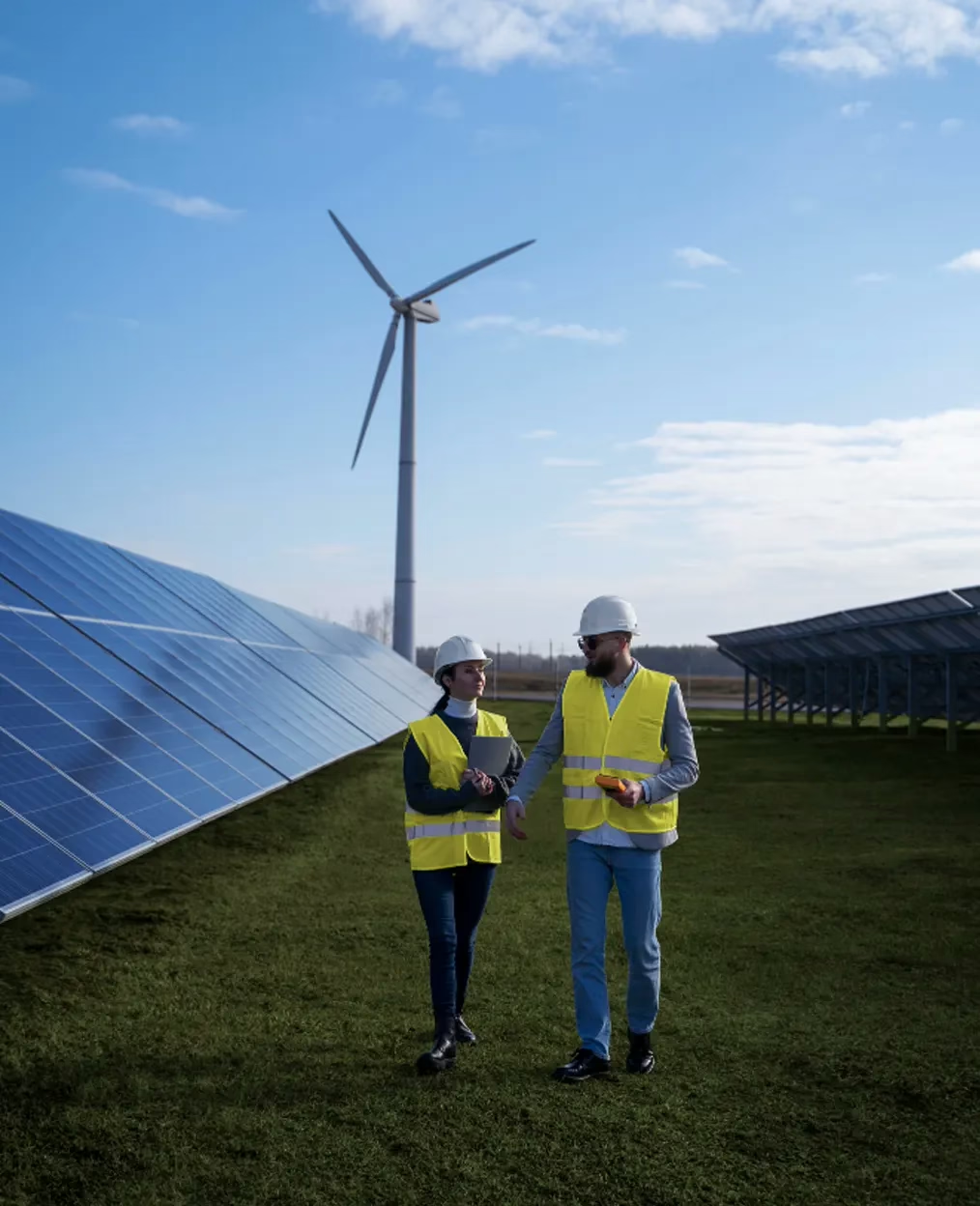
Installing solar panels, wind turbines, or hybrid systems allows you to generate your own electricity, which translates into a direct reduction in your monthly bill. In many countries, the surplus can even be sold back to the grid, generating additional income.
2. Independence from Price Increases
The prices of fossil fuels and electricity in the traditional market are volatile and rise every year. With a renewable energy installation, you can keep your energy costs stable, protecting yourself from price increases.
3. Low Maintenance
Once installed, a solar or wind power plant has very low maintenance costs. Solar panels, for example, can operate efficiently for more than 25 years with minimal cleaning and technical inspections.
4. Incentives and Tax Benefits
Many governments offer subsidies, tax breaks, or soft loans for those who invest in clean energy. This reduces the initial cost and accelerates the return on investment.
5. Increased Property Value
A home or business with integrated renewable energy systems increases its market value, as it represents future savings for buyers or tenants.
📊 How much can you really save?
This depends on several factors:
Geographic location: The more sun or wind your area receives, the greater the potential savings.
Type of system: A photovoltaic solar installation is cheaper than a wind farm, but it also generates less energy.
Energy consumption level: The higher your energy consumption, the greater the potential savings.
Local electricity rates: In regions with more expensive electricity, renewable energy pays for itself faster.
Simple example:
A family consuming 500 kWh/month can save up to 70% on their electricity bill by installing a 4 kW solar system, depending on the solar radiation in their area.
🏢 Savings for businesses: the industrial case
Businesses that rely heavily on electricity (such as factories, logistics centers, or retail stores) have high daily consumption. Implementing renewable systems:
Reduces operating expenses.
Improves competitiveness.
Helps comply with environmental regulations.
Enhances brand image (green or sustainable brand).
Many industries install solar panels on their roofs or land to supply part of their consumption, achieving a return on investment in less than 5 years.
🔋 And the installation cost?
It’s true that the initial investment may seem high, but it should be understood as a long-term investment. Thanks to the decreasing cost of technology (panels, inverters, batteries), today:
The cost per installed kW is up to 80% lower than a decade ago.
The return on investment is usually between 4 and 8 years.
Properly sized systems continue to generate savings for more than 20 years.
📌 Tips to maximize savings with renewables
Conduct a preliminary energy study: Evaluate your consumption and size the system accurately.
Combine energy efficiency and renewables: Reduce consumption with efficient equipment.
Take advantage of tax incentives and public programs.
Consider systems with storage (batteries) if you have high nighttime consumption.
Perform basic maintenance: Clean the panels and check the system regularly.
📝 Conclusion
Investing in renewable energy is no longer just an environmental decision, but also a smart financial strategy. Although it requires an initial investment, the accumulated savings over the years are significant.
Furthermore, it provides energy independence, reduces your carbon footprint, and increases the value of your property or business. Today more than ever, reducing costs with renewable energy is a reality within reach for many.

Comentarios recientes